September 1, 2026
About THAT FBI “Richmond Memo…”
…and the Supposed Attack on Religious Liberty
I’ll never forget the night my old high school buddy called and said, “Dude, turn on ABC News — Richard Keyes is being hunted by the Texas Rangers!” Richard was a former classmate of ours at St. Marys Academy in St. Marys, Kansas — the boarding school where I spent five years of my life, run by the Society of St. Pius X, a group of renegade Catholic priests recently excommunicated by Pope Leo XIV.
Richard Keyes was a loner. A man of few words. He dressed funny, talked funny, and walked with unusually long strides. During gym class, he refused to change into sneakers, shorts, and t-shirts like the rest of us. Instead, he’d remain in his black dress shoes, white button-down shirt, and polyester navy-blue pants. Today, one might question whether he was on the spectrum. Back then we just thought he was eccentric. St. Marys attracted a lot of “eccentric” people.
Another one of those “eccentrics” was a man who went by the name Ronald Griesacker — one of his many aliases. This same fellow recruited Richard Keyes, as well as other members of the SSPX parish in St. Marys, into the Kansas Freemen, an offshoot of the Montana Freemen — which garnered notoriety for its 81-day standoff with the FBI, the longest in the Bureau’s history. It was Griesacker who eventually led Richard to Texas and the tragic future that awaited him there.
Why do I bring up a story from almost thirty years ago, and how is it relevant to the DOJ Weaponization Working Group report released this week?
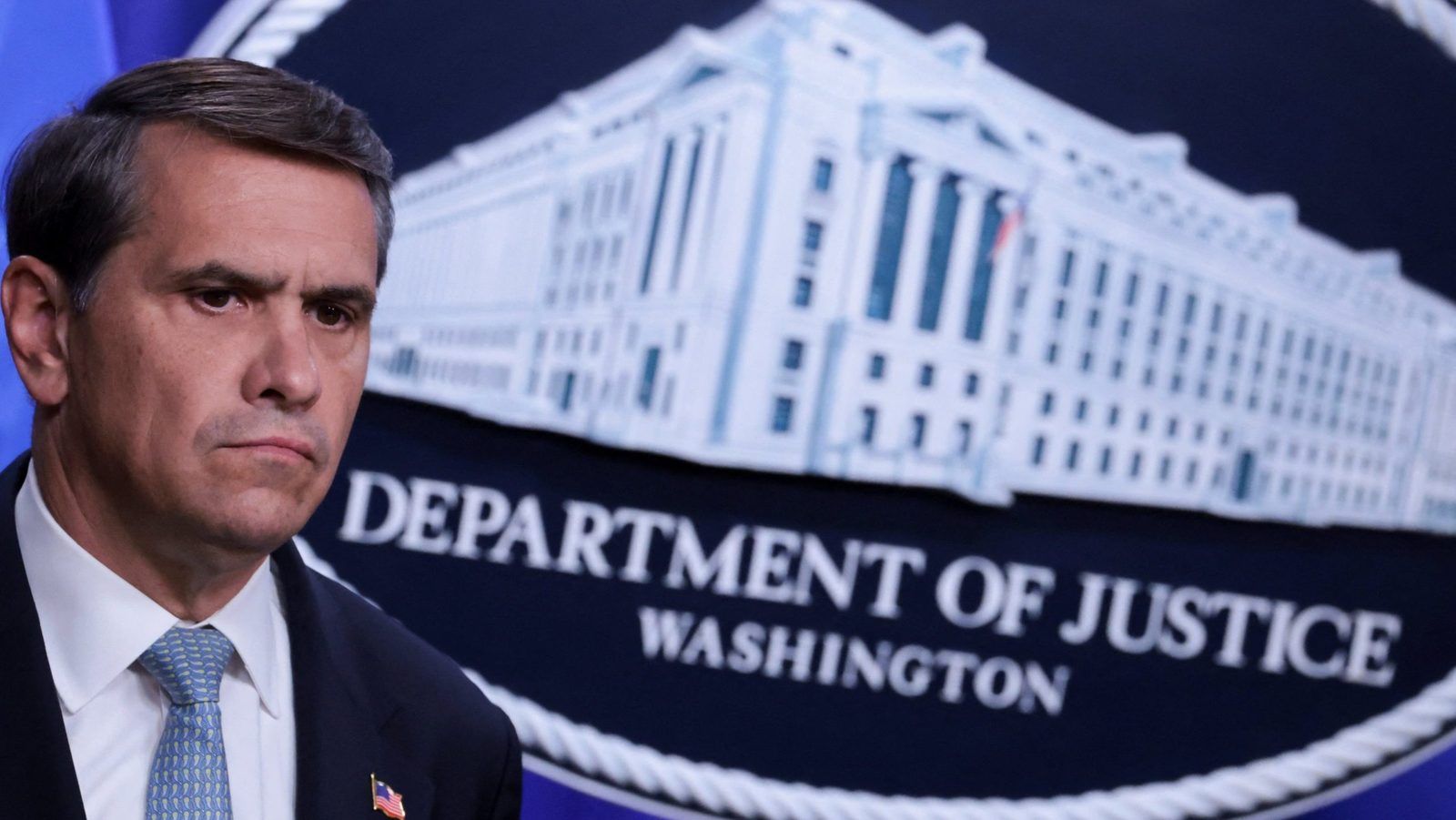
I bring it up because the report found that the FBI’s Richmond Field Office failed to meet Bureau standards in the way it built its case — that its analysts “aligned certain domestic terrorist and religious viewpoints without supporting evidence and created the impression that the FBI conducts investigative activity based on religious affiliation.” The report also pointed out the flaws in the FBI’s reliance on the Southern Poverty Law Center — which has faced serious internal turmoil in recent years, including allegations of racial discrimination and questions about the objectivity of its “hate group” designations — as a central source for the memo’s assessment.
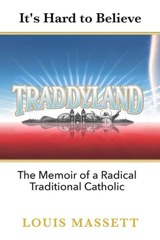
Based on what the report contends was spurious intel, the FBI surveilled two SSPX priests in 2023 — one of them a key figure in my memoir, Traddyland: The Memoir of a Radical Traditional Catholic. For the past three years, this story has been framed by conservative commentators, people in my political tribe, as proof that “the left” has been targeting people simply for adhering to traditional Catholicism. This is the weaponization of the government by progressives against conservatives.
My argument is that it isn’t accurate. THIS is a both/and issue. Both the FBI bungled this investigation AND groups like the SSPX do attract and radicalize people to some degree or another, which poses a threat.
So here are some facts:
1. FBI’s Richmond Field Office failed to follow basic standards set by the Bureau. But I can attest, from direct experience, that much of what the Bureau was worried about is real. The extremism I wrote about in my memoir is real. The misogyny is real. The antisemitism is real. The anti-Americanism is real. The radicalizing effect it has on people is real — especially on those with vulnerable mental health. I have seen firsthand the radicalizing effects of the SSPX. I know because my classmates and I were weaponized against the perceived opponents of the SSPX pastor and headmaster, Fr. Ramon Angles — a man who turned a quaint little Midwestern town upside down through the force of his cult of personality.
- The FBI’s field office Richmond memo was written as such as to suggest the issue was religious, which is a violation of the First Amendment. The issue isn't Traditional Catholicism as such. It was — and this distinction matters — the non-Catholic conspiracy theories and idle speculations passed off as “beliefs,” the material that takes doctrines of faith and morals and turns them into political mandates for action in the public sphere. Many Traditional Catholics are some of the most wonderful people I’ve ever met. But there is a stream of conspiratorial thinking that transcends Traditional Catholicism and bleeds over into other groups — religious and non-religious alike — that genuinely does warp people.
The FBI’s Richmond Field Office wasn’t entirely off the mark in worrying that Radical Traditionalist Catholic circles were prone to cultivating extremism and hateful ideology. Antisemitism, in particular, is cultivated inside certain Radical Traditionalist communities — not primarily as an outgrowth of religious belief but as an inheritance of specific political movements and generational biases. It is passed along through books like The Protocols of the Elders of Zion, and by writers whose names would be familiar to anyone who has spent time inside an SSPX parish bookstore.
The most notorious purveyor of these Rad Trad “doctrines” inside the movement itself was one of the first illicitly consecrated bishops back in 1988: Bishop Richard Williamson. Williamson had such extreme views that he was banned from entering Canada in the 1990s for promoting antisemitism, and who was later convicted in a German court for Holocaust denial. Despite his extreme views Williamson spent the better part of two decades overseeing the formation of SSPX priests in the United States as the rector of the seminary in Winona, Minnesota. It wasn’t like the heads of the SSPX didn’t know his mind, he was extremely vocal about these views.
“Priest 2”, one of the priests the FBI was survelling, according to the DOJ report was formed under Bishop Williamson’s rectorship at Winona. I know, because I was an altar boy at that priest’s ordination in 1992 in St. Marys, Kansas. He was our theology teacher during the last month of my senior year, and I write about him in my memoir. He was the man in the scene I recount in the book — the scene at the dinner table on the day after someone had used gasoline to burn a giant swastika on the school campus lawn, when Fr. Angles overheard me telling that priest about my grandfather, who had helped liberate a Nazi concentration camp, and stopped at our table and said, casually: “The Nazis weren’t evil, Massett. In fact — Hitler had his own priest. He only went off a bit at the end.”
The FBI’s concern about abortion extremism, likewise, was not simply a concern about Catholics opposing abortion. It was a concern that inside certain Radical Traditionalist circles, some believe that murdering abortion doctors is justifiable. The Kansas Freemen counted among its membership not only Richard Keyes, Ronald Griesacker, and members of the SSPX parish in St. Marys, but also Scott Roeder — the man who shot and killed Dr. George Tiller, the “abortion doctor,” in 2009 in Wichita, Kansas. In 1996, Roeder had been arrested in Topeka, Kansas, for having explosive devices in his car. The Kansas Freemen engaged in similar nefarious activities throughout the state, which made Griesacker a prime suspect of Kansas law enforcement — many of whom are on record contending that Griesacker was the luckiest criminal in history, escaping prosecution time and time again.
My classmate, Richard Keyes was not so lucky. Griesacker enticed Richard to go with him down to Texas but once again fortuitously skipped town shortly before law enforcement descended on the fringe group, which ultimately sealed its own fate. Richard was one of the “soldiers” who decided to take the neighbors of their compound hostage and then engage in a standoff with the Texas Rangers. After a brief shootout, Richard fled into the Texas wilderness and spent months on the lam. He was finally apprehended and sentenced to more than seventy years in a federal penitentiary.
The common thread running through all of this is the Society of St. Pius X, which made international news last month for being excommunicated by the Catholic Church for illicitly consecrating four new bishops. Having grown up with the Society of St. Pius X — having spent five years in their boarding school and a year at their St. Thomas Aquinas Seminary in Winona, Minnesota — none of this came as a surprise. What did surprise me was how the right politicized it and got it wrong. Speaker of the House Mike Johnson, a Baptist, went so far as to have a Latin Mass said at the Capitol building.
Most people don’t realize that the Society of St. Pius X was formed as a sign of contradiction to the modern world and to the modern Catholic Church. They fancied themselves truth-seekers and truth-speakers, men who had been ordained by the Almighty to act as modern prophets to warn the world about the evils plaguing society today. Naturally, their message resonated with some and served as a beacon to everyone who considered themselves outliers and outcasts — people who did not approve of or fit in with modernity…people like Richard Keyes, Ronald Griesacker…and Timothy McVeigh.
Since the election of Pope Francis, more and more American Catholics have grown sympathetic to the Traditional Catholic movement, particularly the Society of St. Pius X. But they don’t understand, by its very nature, that this is a contentious movement. The SSPX rejects religious liberty and believes the US Constitution and the very founders of the United States were bad men—Freemasons all, enemies of Christ and his Church. While I agree my fellow Americans have legitimate concerns about the challenges facing America, I hold fast to freedoms granted by our Constitution, I don’t have a lot of sympathy for ideologues who oppose these values.
There are real problems on the left AND on the right because of radicalization. I commend comedians like Bill Maher for calling out the extremes on his own side. I feel compelled to do the same. If we do not put a halt to the polarizing drift, I fear it will eventually tear the nation apart.
The right way to address radicalization inside a religious community is not through ideological surveillance of clergy. The right way to address it is through survivor testimony, honest first-person reporting, criminal investigation of specific crimes, and the slow work of former members speaking publicly on the record. The same goes for the left. Serious people should be able to hold both. Serious institutions must.
My memoir, Traddyland: The Memoir of a Radical Traditional Catholic, touches on exactly this.
I was in St. Marys, Kansas, and I watched the degradation of our community, which was torn in two by the very thing that brought us there to begin with — deeply held religious convictions. But those convictions curdled like sour milk. Christian love was turned into a weapon. People were shunned. Death threats were made against a former SSPX priest, Father John Rizzo. People shot at his brother’s house where he was living at the time. SSPX Parishioners were removing lug nuts from the tires of former SSPX parishoners whohad spoken out against the regime started going to Rizzo’s Mass. And we — the students — were commissioned by the headmaster himself to give “blanket parties” to boys who stepped out of line. Fr. Angles sent classmates of mine to spy on their own friends. He threatened, at one point, that my classmate, whom Angles mistakenly believed was responsible for the burned Swastika on campus, “won’t do anything again” implying something nefarious would befall him. I remember, in retrospect with something close to horror, how easy it was for us as sixteen- and seventeen-year-old boys to justify sneaking into another student’s dorm room, binding him up, peppering him with charley horses, and telling him to straighten out his act — “or else.” Why did it feel easy? Because the headmaster, Fr. Angles, sanctioned it.
If God is with us, who can oppose us?
In 1995, the FBI descended upon my alma mater after the Oklahoma City bombing — with good reason. There is credible reporting, some of which I document in my book, that Timothy McVeigh had ties to the St. Marys community and specifically to Ronald Griesacker.
In 2022, there were real reasons to be concerned about violent radicalization inside traditionalist Catholic circles — but the FBI’s method of surveilling clergy based on ideological association was not the right way to address the concern. Priest #2 in the DOJ report often used to say to us our senior year Theology class, “Gentlemen, you are going to have to shed your blood.” Do I think he was calling us to arms? No. But some did. When one is faced with eternal damnation or the threat of death, some take it upon themselves to fight back — to become militant, to take matters into their own hands.
In December of 2020, after news broke over the belief that the election had been stolen from Donald Trump, my mother — a diehard supporter of both the SSPX and President Trump — said to me, “Louie, we have to fight!”
I asked her, “Mom, fight who? Fight when? Fight where? What are you talking about?” I told her we are a nation of laws, and that if we tear down those laws to go after evil, where will we turn for protection, with all the laws laid flat, when evil turns on us?
Less than a month later, January 6th happened.
On that day, we all lost. Not just the right. Not just the left. America.
My mother did not speak to me for two months after that December phone call. My father grew distant. My siblings, watching all of this, took sides. The election that was supposed to be a fight for the soul of the country became, inside my own family, the thing that finally severed us from each other.
The purpose of this essay is not to call out the Trump administration or to attack Traditional Catholics and lay the blame of the world on them. There is plenty of blame to go around. As the singer of U2 Bono, sings, “if you’re looking for someone to blame, throw a rock in the air, you’re bound to hit someone guilty.”
Chapter one of my memoir Traddyland begins with a quote from the Greek playwright, Aeschylus: “In war, truth is the first casualty.” We have to strive to be honest with ourselves, with our families, our friends, our communities about the problems we face. We have to have compassion for one another as we’re all broken in some form or fashion.
In the final analysis, having “kicked the dust off” from radical traditional Catholicism and all of its trappings, I understand the desire to “save people” to create a better society. But I think St. Augustine said it best when he said, “The truth is like a lion, it doesn’t need to be defended. It just needs to be set free.” The freedom’s that we’re granted by the First Amendment of our Constitution is a great thing. I do not believe in a Catholic monarchy like the SSPX does. I don’t buy the “Error has no rights” mantra they profess. People are not “errors”. God bestowed free will on all of us. In that space is room to make mistakes, to err. But that is what redemption is all about. That is what love is for. It is the opportunity to say you are greater than your mistakes. Mistakes are made. Mistakes need to be addressed. But for heaven sake, let us not compound them for political gain.
Comments